
Navigating Injury
Weekly Wisdom - Episode 40
May 2, 2026
I’m not a doctor. I’m not a physiotherapist. I have no relevant credentials. So, when the advice I give flies in the face of everything the experts tell you, there is no reason for you to listen to or believe me. That’s okay. It is your life, and you are free to live it your way. Follow the expert advice if you want to; that is your prerogative. Or you can do something that works better. Your choice.
When Injury Happens
Last Wednesday at judo, I suffered a first-degree AC joint separation when I threw myself directly into the floor. The point of my right shoulder impacted with the force of gravity plus the force of my throw. It is the type of impact that could break a collarbone, separate a shoulder, or both. Lucky for me, nothing broke, and the shoulder stayed in place. I’ve injured shoulders in judo before. I know a bit about shoulder injuries. But though structurally my shoulder remained intact, the pain was excruciating. As painful as a shoulder separation or rotator cuff tear.
Most people would get off the mats then. But after assessing to make sure nothing was broken or dislocated, I made the uncommon decision to continue. Of course, there was no more throwing or fighting for me that day. I did what little I could manage within the narrow window of my painfree range of motion.
Why Rest Isn’t Always Best
The expert advice for this sort of injury is to rest the affected joint in the immediate aftermath. That sounds reasonable. Especially when the injury is painful enough. It was tempting to immobilize my shoulder by supporting it in a sling and to perform daily tasks with my non-dominant hand. But that would only slow recovery.
Your best bet is to keep moving and use the injured arm as much as pain will allow. No, this does not mean pushing through pain; it means exploring where the threshold is. Find your available painfree range of motion and work within it. Brushing my teeth, washing the dishes, folding the laundry—all these household tasks were made more difficult, but those movements all mimic the rehab exercises that the physio is going to give you anyhow. Better than those rehab exercises actually, since they are not an approximation of real-world movement but the real thing. To this, I also added a bit of gentle crawling.
Back to the Gym
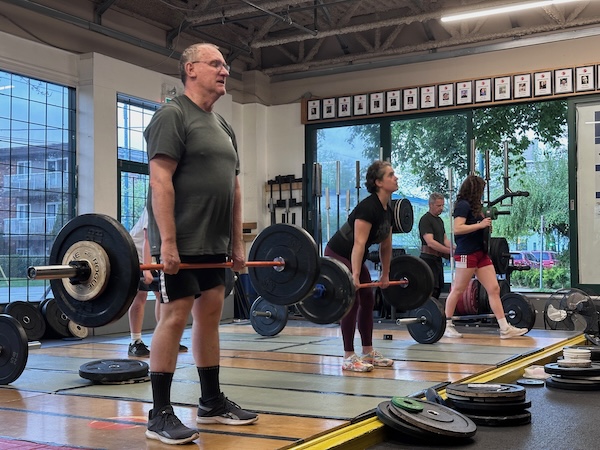
You can’t sleep on an injured shoulder, and getting in and out of shirts is hell. But life goes on. I thought about cancelling my 6am workout the next morning due to discomfort but then decided that would set a bad example. Instead, I showed up for the 4x1000m row even though I wasn’t sure I could hold the rower’s handle, never mind pull it. As a coach, I have in the past strapped the handle to a client’s waist so that she could row without shoulder pain. I came prepared to improvise as required.
But testing the shoulder before class, I found that with the damper setting low, if I pulled slowly, I could row without pain as long as I kept the correct path. And here’s where it is important to differentiate discomfort and pain. They’re not the same thing, though many people, overwhelmed by fear, treat them as such. Rowing was uncomfortable on the shoulder, but if done gingerly, not painful. And there is some trial and error in there, yes, when I didn’t get the stroke quite right, there were brief moments of pain, signals that helped me course correct. But that’s all pain is: a signal.
Pain vs. Discomfort
Again, some people are so terrified of pain that they refuse to explore their thresholds, refuse to do anything that brings them close to the possibility of pain. I use pain as my guide. No, I don’t want to push through it; I want to skirt around it. Get as close as possible without triggering it. And yes, that means that I will occasionally misstep and get a jolt of pain, but that’s not dangerous if I’m moving slowly and carefully; it's just information.
My first row, I only completed 750 metres of the 1000 in the 5 minutes allotted by the coach. But in round two, I broke 800. In fact, I moved better each round, maintaining negative splits, nearly hitting 1000 metres in the final round. More importantly, my shoulder began to relax, loosen up and move much better. This is less than 24 hours after the initial injury.
Recovery Through Movement
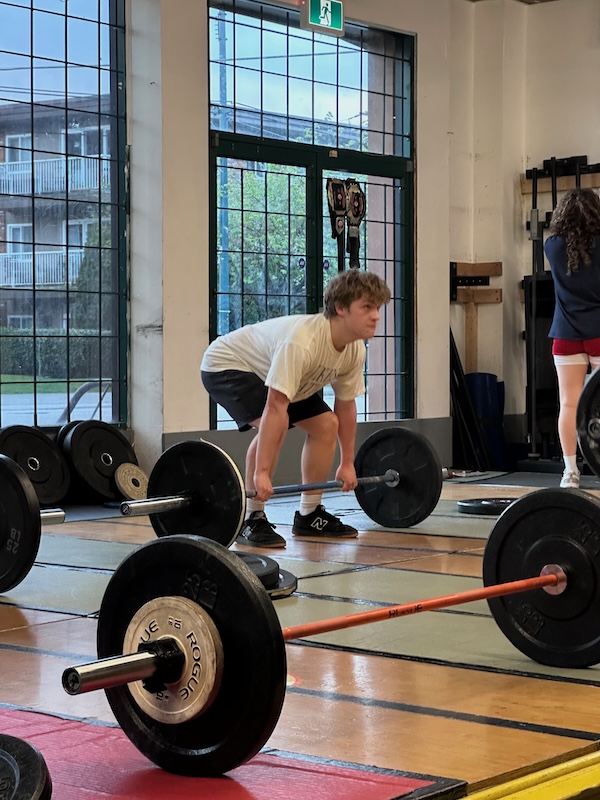
Success builds on success, and by the next afternoon, I was able to demonstrate movements while coaching, including heavily banded, strict ring muscle-ups. I could even pull my work shirt on over my head with less discomfort than before. It contradicts everything we have been taught about injury management. The speed of recovery is almost supernatural. But it is a trick I have been able to perform consistently since I gave up the old notions of babying an injury and shunning discomfort.
What are the takeaways: motion is lotion, your body heals through movement. The best, most effective rehab exercises are the movements you do daily. Pain is a signal. Don’t fear it; use it to guide your recovery. Don’t avoid discomfort. You need to cautiously explore your available range of motion; it will expand quickly with consistent use, so if you do not keep testing, how will you know? Do not be stupid. Don’t ignore pain or push through it. Pain is your body telling you what not to do and where not to go. Being a tough guy and ignoring your body’s signals will just make you more broken. Not being afraid of fear is not the same as gritting your teeth and pushing through it.
You Were Born to Move
As much as you are able, you need to keep moving. Anyone who tries to take away your movement is pointing you in the wrong direction. That way lies disability and, eventually, death. You were born to move; movement heals; surrender it to no one.
