Bone Health 1x100 ≠ 100x1
Weekly Wisdom, Episode 49
June 26, 2026
Sometimes I think that the human brain is impervious to logic. We often struggle to comprehend very simple concepts.
Bone health is a very real concern for an aging population. Particularly for women, who are statistically more likely to suffer from osteoporosis. Hip fractures will hospitalize a lot of you. Somewhere in the neighbourhood of 30% of people with hip fractures will not recover.
This subject came up in our family recently when a relative close in age to me (we’re in our 50s) was diagnosed with advanced osteoporosis. In her 50s! This diagnosis bodes poorly for her long-term health. Presumably–God willing–we should both have a few more decades to live. What kind of quality of life is she likely to have if her bones are already fragile?
Now, before you go reaching for the calcium supplements, let me remind you that what actually works for bone preservation is not supplements but impact and load-bearing. I understand that this might sound heretical, especially when your doctor is warning you of fragile bones, scaring you into inactivity. But sedentarism is what got her into this situation in the first place.
The relative in question hates exercise. She hates lifting weights. She hates impact. She prefers things like yoga and Zumba. Unfortunately for her, your body doesn’t care about your preferences or hers. The forces required to build bones are the same for everyone, whether you like it or not.
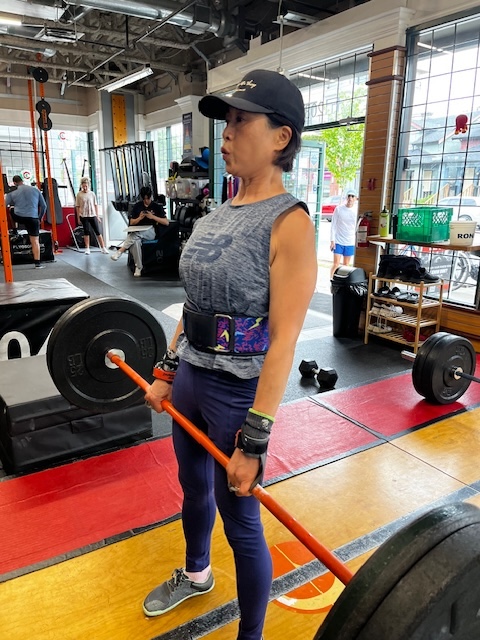
Stress on the tissue is required to signal your body to build stronger bones. Obviously, you need to dose this appropriately to your fitness level. Start carefully and gradually progress impact and load, allowing time for your body to adapt.
Why 1×100 Is Not the Same as 100×1
But here’s the logical fallacy that human beings tend to make:
In math, 1x100 is the same as 100x1, but when it comes to adaptation-provoking stimuli, it just doesn’t work that way. Don’t believe me?
What do you imagine would happen if I dropped a 100lb weight on you? It would probably hurt, right? Might even injure you.
Now, what if I dropped a 1lb weight on you one hundred times? Nothing. Probably not even a bruise.
And yet, every day, people go to the gym and perform 100 reps with light weights in the hopes that it might help preserve their bone density. As if 100 reps at 1lb can replicate the stimulus that 1 rep at 100lbs will.
The same goes for impact. Jumping and running are great ways to stimulate bone density.
(Angry tangent: I hate aquafit. Not because it is inherently bad. But because for many elderly people it is their only form of fitness activity. Elderly people whose disintegrating skeletons can only be preserved by load-bearing and impact are being sold a no-impact exercise program in a buoyant environment, the exact worst thing they can be doing for their health.)
Intensity Creates Adaptation
Healthy bones need impact. The higher you jump, the better. Running is good. Sprinting is better. Air bikes and rowing machines are great for cardiovascular health, but do little to preserve bone health. And if you think walking with a 20lb backpack is a reasonable substitute for the impact forces produced by running, you are fooling yourself.
This is the piece that folks miss: physiological adaptation ONLY occurs when the stimulus EXCEEDS a certain threshold. If it doesn’t strain you, it doesn’t change you. This means you cannot replace intensity with volume and still get the desired outcome.
But please don’t just go out and start jumping and sprinting without working up to it. If you have not been engaging in these activities, you need to build up to them. Safe dosing is critical.
Your first back squat should not be performed at 400lbs. Start low, then build your way up in a methodical manner. The load should challenge you, not break you. But remember, if it's comfortable, it is not stimulating the desired adaptations. All desirable adaptations occur outside your comfort zone.
Choose Prevention Over Regret
If you want strong, healthy bones that support a healthy life long into your later years, you need load AND impact. It is not either-or. Each stimulus strengthens the bones in different ways.
In the end, you get to choose which one you prefer: the hardship of disability and illness or the hardship of prevention. Or, as the ancient Chinese proverb goes: If you want to taste sweet, you must first learn how to eat bitter.
Recommended Viewing
But don’t take my word for it:
