3 Pillars of Sustainable Fitness
Weekly Wisdom #58
August 28, 2026
Moneypenny is known for asking insightful questions, and last week he asked one that I think is worth sharing. He wanted to know, from my experience, what the people with the best long-term fitness outcomes have in common.
My answer is based on both my coaching experience and my own life as an athlete in CrossFit and judo. I've been participating in CrossFit since 2005 and coaching since 2008, and over those years I've watched hundreds of athletes come and go.
At Empower, we've had extraordinary success helping people build sustainable fitness habits and stay active for more than a decade—not bad considering we only opened on Vancouver's West Side 13 years ago. What's especially remarkable is that many of our members began with us in their 40s and 50s, often carrying old injuries, movement limitations, or years away from regular exercise.
My experience in judo tells a similar story. I started in 1980 at the ripe old age of eight and have unsuccessfully retired from the sport three separate times. Having failed repeatedly at retirement, I've spent a great deal of time figuring out how to continue training without destroying my body.
Looking back on more than 20 years of CrossFit and over 40 years of judo, I believe there are three characteristics shared by people who enjoy long-term success in fitness and sport: consistency, minimum effective dose, and resilience. These three pillars aren't just about athletic performance. They're the foundation of a sustainable fitness practice—one that supports strength, mobility, independence, and a longer health span as we age.
Consistency
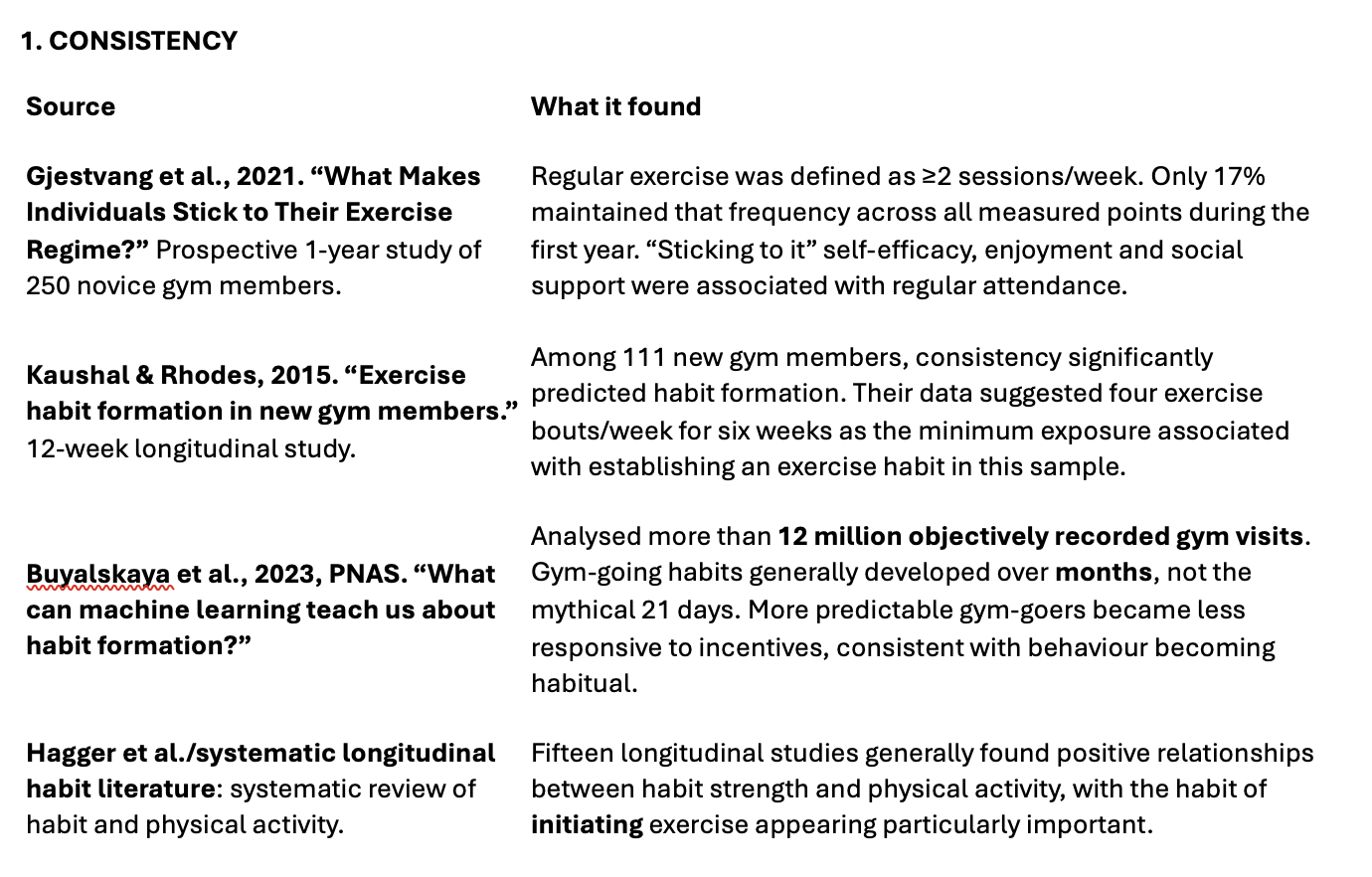
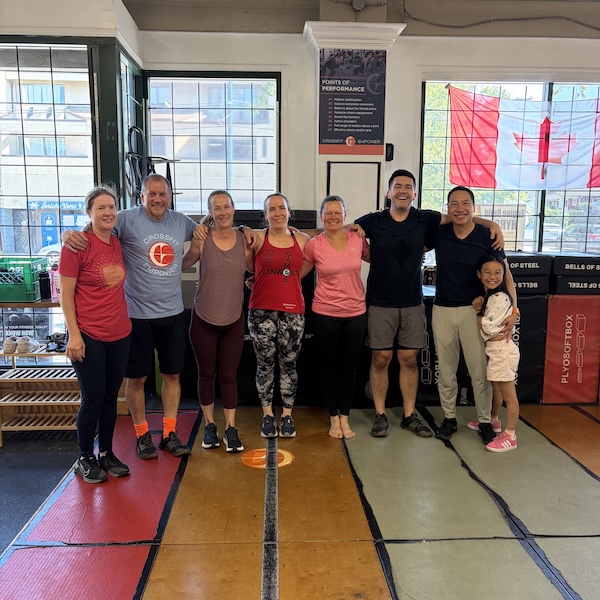
If I had to choose just one factor that separates people who succeed from those who don't, it would be consistency. It sounds almost too simple, but over time it never fails. People who keep showing up get results. Some improve quickly, others more slowly, but without exception, the people who continue to train eventually win.
The fitness industry has known for years that new members who attend roughly eight times per month during their first few months are dramatically more likely to reach their goals. Those who never establish that rhythm often become discouraged and drift away.
Of course, consistency isn't easy. Life has a habit of getting in the way: work, school, kids, travel, vacations, illness, injury. There will always be a hundred reasons not to work out. The people who continue making progress aren't less busy than everyone else. They haven't been blessed with easier lives. They've simply developed strategies that allow them to keep training despite life's interruptions.
Nobody is born consistent. I certainly wasn't. Consistency is a muscle you develop over time.
My first three years of CrossFit were hit and miss before I finally committed to training three days per week in 2008. Eventually that became four. For the next 11 years, two months, one week, and one day, I completed every programmed CrossFit workout during the calendar year—somewhere around 272 workouts annually.
Consistency changed everything.
But consistency alone isn't enough.
More isn't always better.
Which brings us to the second pillar.
Minimum Effective Dose (MED)
People who create sustainable, long-term fitness understand a simple truth: the training happens in the gym, but the adaptation happens during recovery. Exercise provides the stimulus. Recovery is where you actually become stronger. Too much of a good thing eventually breaks you down.
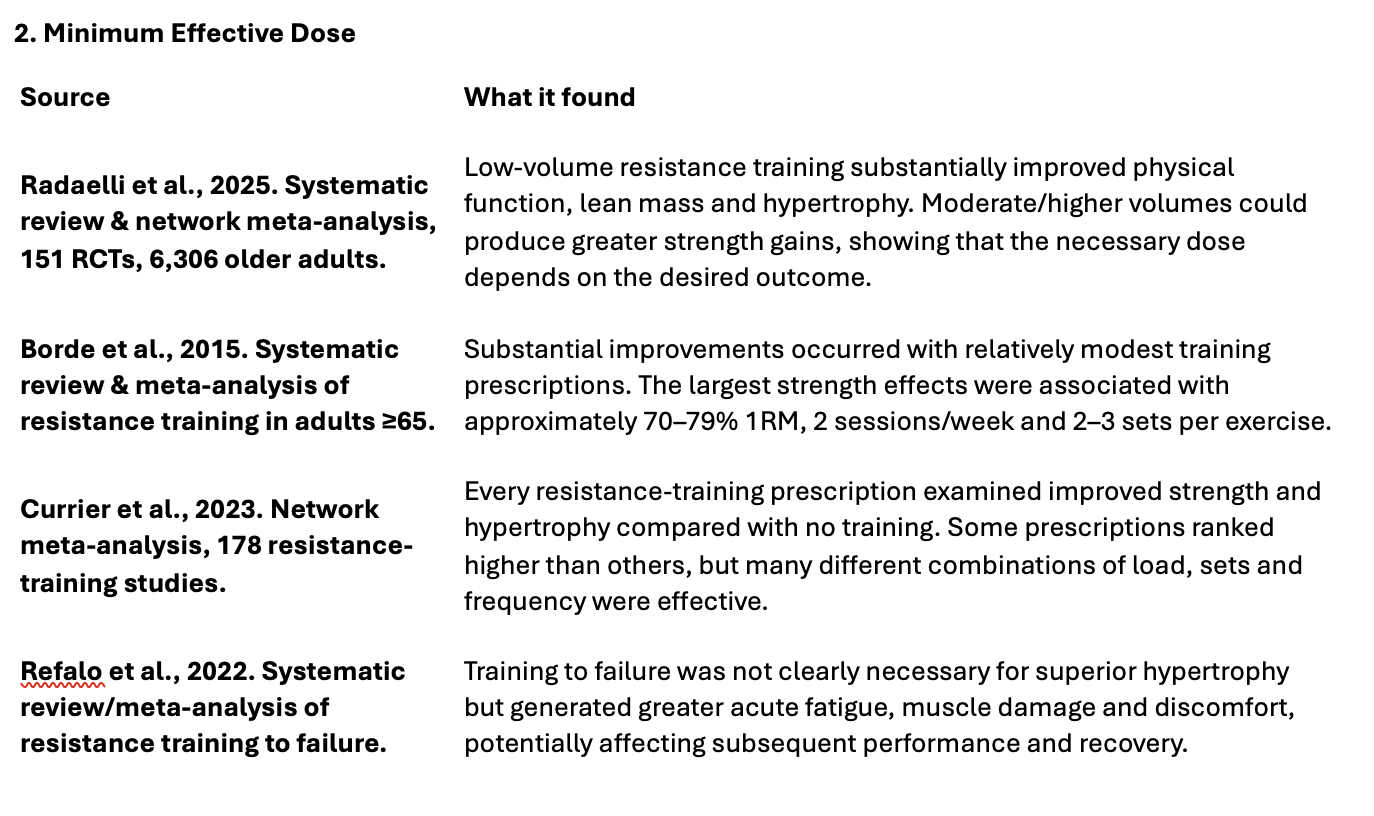
That's exactly what happened after 11 years of never missing a workout. Today my focus is very different. Now I train using the Minimum Effective Dose—the smallest amount of training required to produce the results I'm looking for.
So how do you find your minimum effective dose?
For most adults, that means training two to four times per week. If CrossFit is your primary activity, three to four sessions is usually ideal. If you're also running, cycling, playing sports, doing martial arts, or participating in other high-intensity activities, two or three quality sessions may be plenty.
But dosing isn't only about frequency. It also applies to intensity and volume. As a general rule, about 70% effort is enough for most workouts. That's challenging enough to stimulate adaptation without leaving you physically or mentally exhausted. Likewise, if your goal is lifelong fitness rather than short-term performance, most workouts should leave you feeling energized instead of completely depleted.
You don't have to be precious about it. Occasionally pushing beyond that threshold won't hurt you. Just remember that if you borrow from tomorrow's recovery today, tomorrow may need to be a lighter day.
Combat sports taught me this lesson the hard way. Competition is fun, but training and competition are not the same thing. If every workout feels like a championship event, you'll eventually burn out, get injured, or simply stop enjoying the process.
Resilience
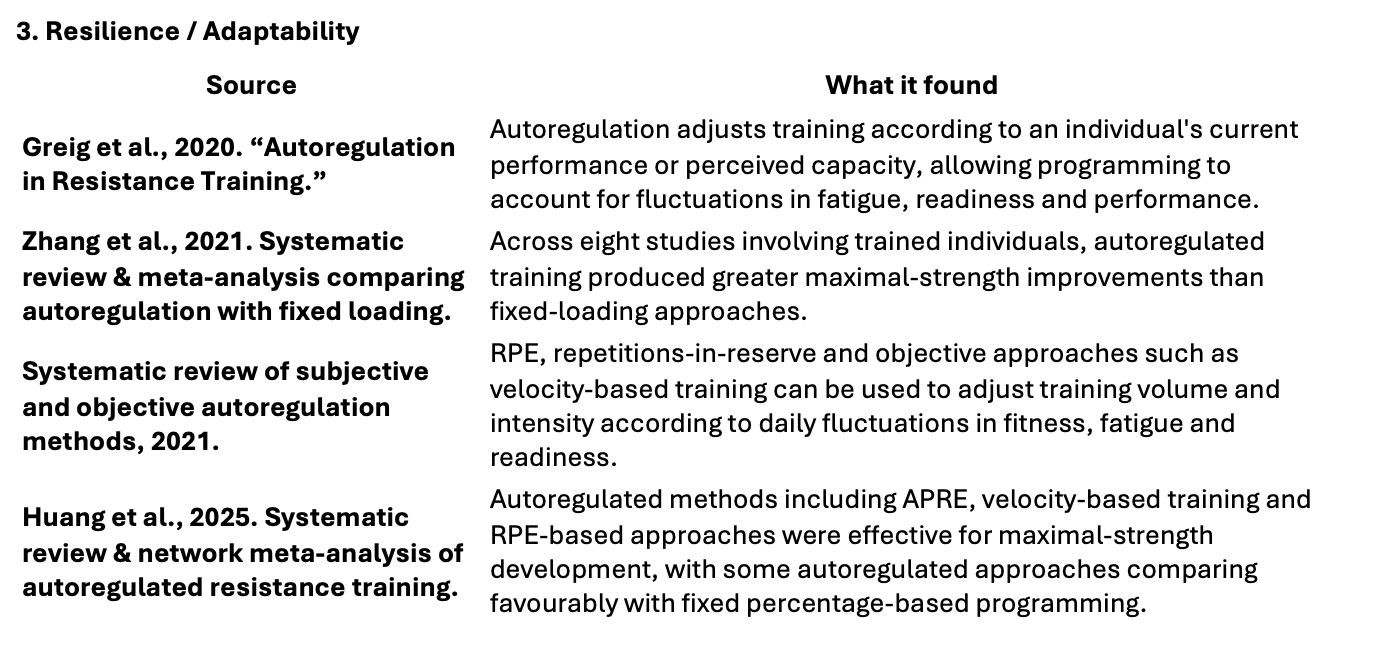
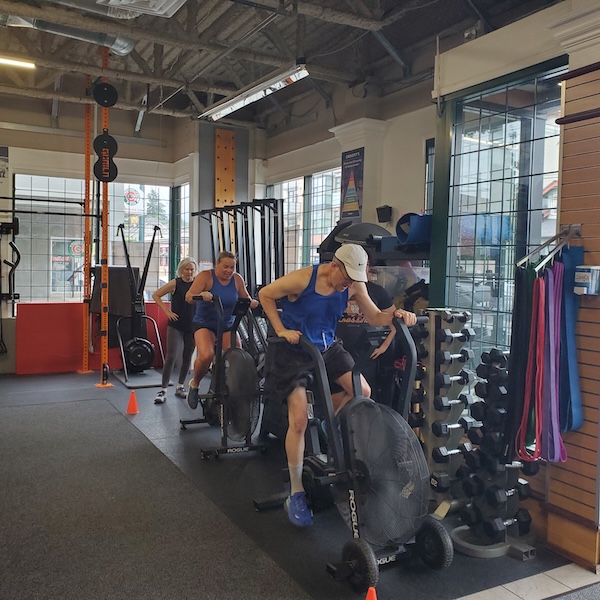
The third pillar is resilience. Resilience is both a mindset and a skill. It's the commitment to keep showing up, balanced with the wisdom to listen to your body.
Most people live at one extreme or the other. They either skip the gym because they aren't feeling 100%, or they insist on pushing through pain as though toughness alone will solve the problem. Neither approach is particularly adaptive.
Consistency means showing up. Resilience means showing up without predetermined expectations. You meet your body where it is today—not where it was, not where you wish it were, but where it actually is.
At Empower, we work with what is—whether you're a beginner walking into your first CrossFit class at 50, or an experienced athlete training around an old injury.
That might mean modifying movements, reducing loads, adjusting volume, managing intensity, or combining several of those strategies. This is where coaching becomes invaluable. A good coach helps you continue building strength, mobility, confidence, and resilience even when life—or your body—throws you a curveball.
A brittle mindset clings to what it wishes were true. A resilient mindset works with reality.
People who build lifelong fitness continue showing up despite setbacks, injuries, illness, stressful weeks, or the inevitable changes that come with getting older. They simply adjust the plan.
On the day I wrote this, I'd been sick for several days and hadn't eaten in over 24 hours. The workout called for heavy cleans and muscle-ups. Instead of forcing my way through 21-15-9, I reduced it to 9-6-3 and called it a good day. It was enough stimulus to encourage adaptation without asking more of my body than it was prepared to give.
Workouts should build you up, not break you down.
A Fitness Practice You Can Sustain
So thanks to Moneypenny for asking such a thoughtful question.
If your goal is to build a body that serves you well for decades—not just this season—master these three pillars:
Be consistent.
Find your minimum effective dose.
Build resilience.
Will this make you a CrossFit Games champion? Probably not.
But it just might help you enjoy a long, active life in a body that remains strong, capable, and free to do the things you love. For most of us, that's a far better prize.
Armed with consistency, guided by a minimum effective dose mindset, and supported by resilience, you'll give yourself the best chance of aging beautifully.
I look forward to doing exactly that alongside you.