
Walking’s Not Enough
Weekly Wisdom - Episode 46
June 13, 2026
Walking is an important component of a healthy, active lifestyle. I believe you should walk as often as possible. Every day, if possible. For as long as possible. As long as you aren’t crippling yourself, I am not aware of an upper limit on the benefits of walking. As a general rule, where walking is concerned, more is better. An added bonus: walking amplifies the benefits of the workouts you perform in the gym, accelerating your results.
Honestly, I’m a bit of a slug, but I try to find an excuse to walk a bit each day. I walk to the grocery store; I walk to work; I walk to and from kickboxing. When I can, I book walking meetings. On Sundays, HeeHee and I do a lovely morning walk, sometimes 5+K. Two weeks ago, we even walked out to Michael’s on Willow Street (we live near Alma).
Walking Is Great. It’s Just Not a Workout.
Walking is great. And the new rucking fad, well, I’m the trendsetter who promoted this fantastic rest day option. But there’s the rub folks: REST DAY OPTION. Rucking is a great way to rest and recover from your week of WODs. What it is not is a replacement for your workout.
Walking is healthy. Walking is not working out. Remember: “Intensity is the independent variable most commonly associated with maximizing the rate of return on favourable adaptation to exercise.” You want results, you need intensity. Accept no substitute.
No, this is not coach dissing rucking. Coach approves of rucking. As long as it is not replacing your workouts.
How Often Should You Actually Work Out?
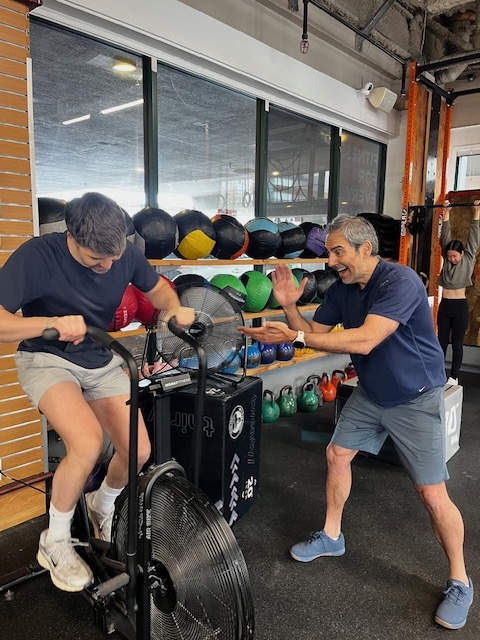
Which begs the question: “How often should I be working out per week to get the health and fitness benefits associated with CrossFit?” If you are training just for general health and well-being following a high-intensity training program like CrossFit or HYROX, the answer for most people is three days per week. So, if you have completed three CrossFit workouts this week, then by all means, take a day off and go for a ruck. But if you are counting your ruck as one of your three weekly workouts, you are fooling yourself. Your ruck is subtracting from, instead of adding to, your fitness. If you’re working out less than three times per week, you’re not rucking because you need a recovery day; you’re rucking because you are avoiding the discomfort of intensity. To your own detriment.
Three days per week. That should be your minimum if fitness is your goal. If you have other goals, three days may not be enough. If you want to master pull ups, pushups, toes-to bars, the Olympic lifts, and other staple CrossFit movements, you may require more than three days per week in order to get the practice frequency required.
If you want to master advanced movements like muscle-ups, handstand walking, and handstand push-ups, you will almost certainly require more than three days per week. And you’ll probably require some private one-on-one coaching sessions too. Most of us did.
Your Results Reflect Your Reps
It is not uncommon for a member who trains only two or three times per week to ask me why they are taking so much longer than some of their peers to get their first pull-up or figure out the overhead squat. It is not due to an inherent lack of ability; it most often is due to insufficient practice reps. In general, the more you train, the faster you progress.
HeeHee and I experience this at kickboxing, judo, and BJJ, which we attend once per week. Many of our classmates who joined after us have been promoted past us as their skill levels race ahead of ours. But that is because they are attending three to five classes per week in contrast to our once per week. We have no problem with that. We are on the slow road to learning and enjoy the scenery as we go. There’s no problem with it as long as your expectations match your commitment.
Match Your Expectations to Your Commitment
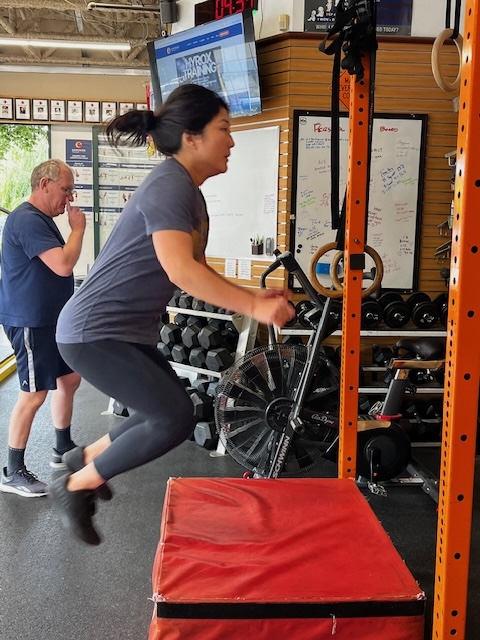
So how often you train CrossFit is up to you. Three times per week if you are here just for general health and fitness. Don’t expect to quickly master the various skills that show up in the programming. Just enjoy the fitness outcomes. Want to master skills faster? Consider coming four or five times per week. Don’t overdo it; listen to your body. When you’re feeling beat up, take a day off to walk. Ruck optional.
Want to compete in CrossFit? Want to become the next Hardrock or Bobo? You’re going to want five to six days per week, and some of those should be one-on-ones with an experienced coach who can help work with you on skill mastery. But unlike walking, working out more is not better. Train six days if your body is up to it, but take day seven off. Go for a walk. You’ve earned it.
The Bottom Line: Intensity Drives Results
As with anything in life, your results are directly proportional to the effort you put in. And all positive results are produced outside your comfort zone. Walking is an essential component of your health and well-being, but it is not fitness.
Intensity Matters
For every 1 minute of high-intensity exercise, you need to do 8 minutes of moderate-intensity exercise or 200 minutes of light exercise to get a similar reduction in risk for cardiovascular disease. If we put rucking in the moderate intensity camp (it is certainly not high intensity), you would need to ruck for 2 hours and 40 minutes to get the cardioprotective benefits of a 20-minute CrossFit workout.
Further reading:
1. Walking lowers mortality risk
3. HIIT improves cardiorespiratory fitness more than moderate continuous training
4. High-intensity functional training improves fitness/performance
5. Resistance training frequency and strength gains
6. Vigorous intermittent lifestyle physical activity with mortality
