Are You Fit or Athletic?
When most people talk about fitness, they are referring to strength and conditioning.
There are many ways to develop conditioning: cardiovascular and respiratory endurance, stamina, and muscular endurance. HYROX, F45, and Orangetheory all come to mind. All effective conditioning programs.
There are also many ways to get strong. Powerlifting, Olympic weightlifting, and even some bodybuilding programs can be effective at developing strength—the ability to apply force to an external object.
Combine a few days per week of conditioning with a few days per week of strength training, and you will have an effective strength and conditioning program.
You will become what most people consider fit.
But that will not necessarily make you athletic.
And this is where CrossFit changed the game.
Fitness and athleticism are not the same thing
CrossFit was the first strength and conditioning program to bring an athletic training model to the general public.
Most people use the word fit to describe someone who has great cardiovascular and respiratory endurance, muscular endurance and/or strength.
Athleticism adds something else: how well you can move.
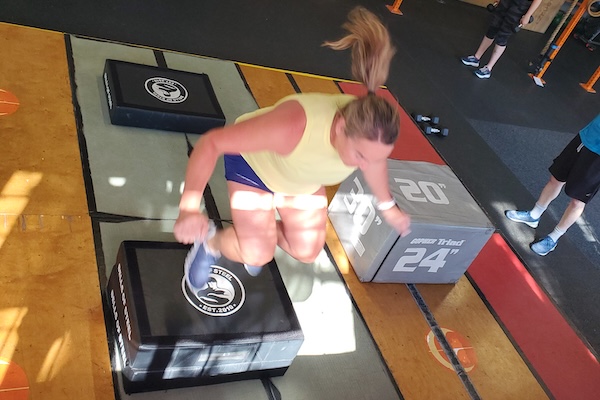
Balance. Agility. Accuracy. Coordination. Speed. Power.
These are essential attributes of athletic training, yet they are largely missing from conventional strength and conditioning programs.
CrossFit profoundly changed the fitness landscape by introducing this neurological piece to general fitness. It wasn't enough to simply get stronger or improve your engine. You also had to develop skill.
There is nothing new about this approach. Elite athletes and warriors have always trained this way, balancing strength and conditioning with skill work.
What CrossFit did was bring that model to the rest of us.
Life is an athletic event
Why does any of this matter to you?
If you don't play sports, why should you care whether your training makes you more athletic?
Because life is an athletic event.
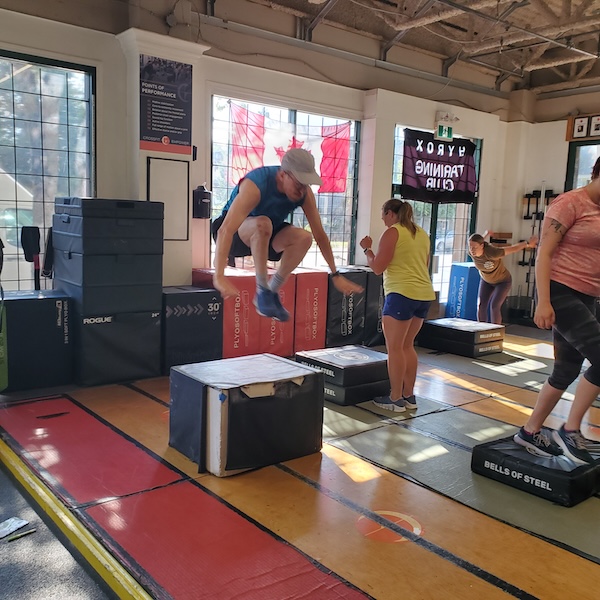
If you're climbing the stairs and you miss a step, accuracy matters.
If you trip on a curb and need to recover, balance and coordination matter.
If you need to move quickly to catch yourself—or someone else—speed and power matter.
These aren't just sporting attributes. They are physical skills that help us safely navigate the world.
And as we age, maintaining them becomes increasingly important to our resilience, confidence and independence.
Strength matters. Cardiovascular fitness matters. Muscle mass matters. But simply possessing those physical resources isn't enough. You also need to be able to use them when life demands it.
That is athleticism.
The importance of power
Of all these qualities, power may be especially important as we age.
Recent longevity research is increasingly pointing toward the importance of our ability to produce power.
Power isn't the same thing as strength. It is strength expressed as a function of time.
In other words, it isn't simply whether you can produce force. It's how quickly you can produce it.
And power is something very few strength and conditioning programs outside CrossFit deliberately develop. Many cannot even define it or measure it.
In CrossFit, we can:
Power = (load × distance) ÷ time
We have measured power output from the very beginning.
That's essentially what you're doing when you record your workout result on the whiteboard. How much work did you perform, and how long did it take you?
Once again, CrossFit was decades ahead of the sports and health sciences in prioritizing power as an expression of health.
More fitness isn't always my goal
Interestingly, the most valid critique I have heard of CrossFit comes from athletes themselves.
Their complaint is that CrossFit competition has skewed too far toward strength and conditioning at the expense of athletic development.
As a former athlete myself—and someone who prioritizes maintaining athleticism as I age—I tend to lean in this direction.
I bias my own training toward speed, power and skill development over raw strength or endurance.
More quality movement. Less volume.
This probably makes me less fit in the conventional sense.
But it allows me to prioritize athleticism.
And at this stage of my life, that's what I care about more.
For me, the goal isn't simply to lift more weight or improve my conditioning. It's to preserve the broad physical capacity to move well and respond effectively to whatever life throws at me.
That's the kind of fitness I want to carry into old age.
Why doesn't everyone train this way?
If athletic development is so valuable, why isn't it part of every fitness program?
Because it's hard.
Balance, agility, coordination, speed and power aren't qualities you develop simply by giving someone a workout. They involve skill, and skill requires coaching.
It is difficult to scale a business that requires trainers who can competently teach strength, conditioning and athletic movement.
Developing good coaches is the sticking point for every CrossFit gym. It prevents us from spitting out franchises on every block.
The investment we make in coach development, other strength and conditioning franchises put toward marketing.
At Empower in Vancouver, we have chosen the coaching route.
Because whether you're a competitive athlete or an adult who simply wants to remain strong, capable and independent as you age, the goal isn't just to be fit.
It's to be able to do something with your fitness.
At the end of the day, we just have to trust that our results speak for themselves.
